 Today's Read Contributor
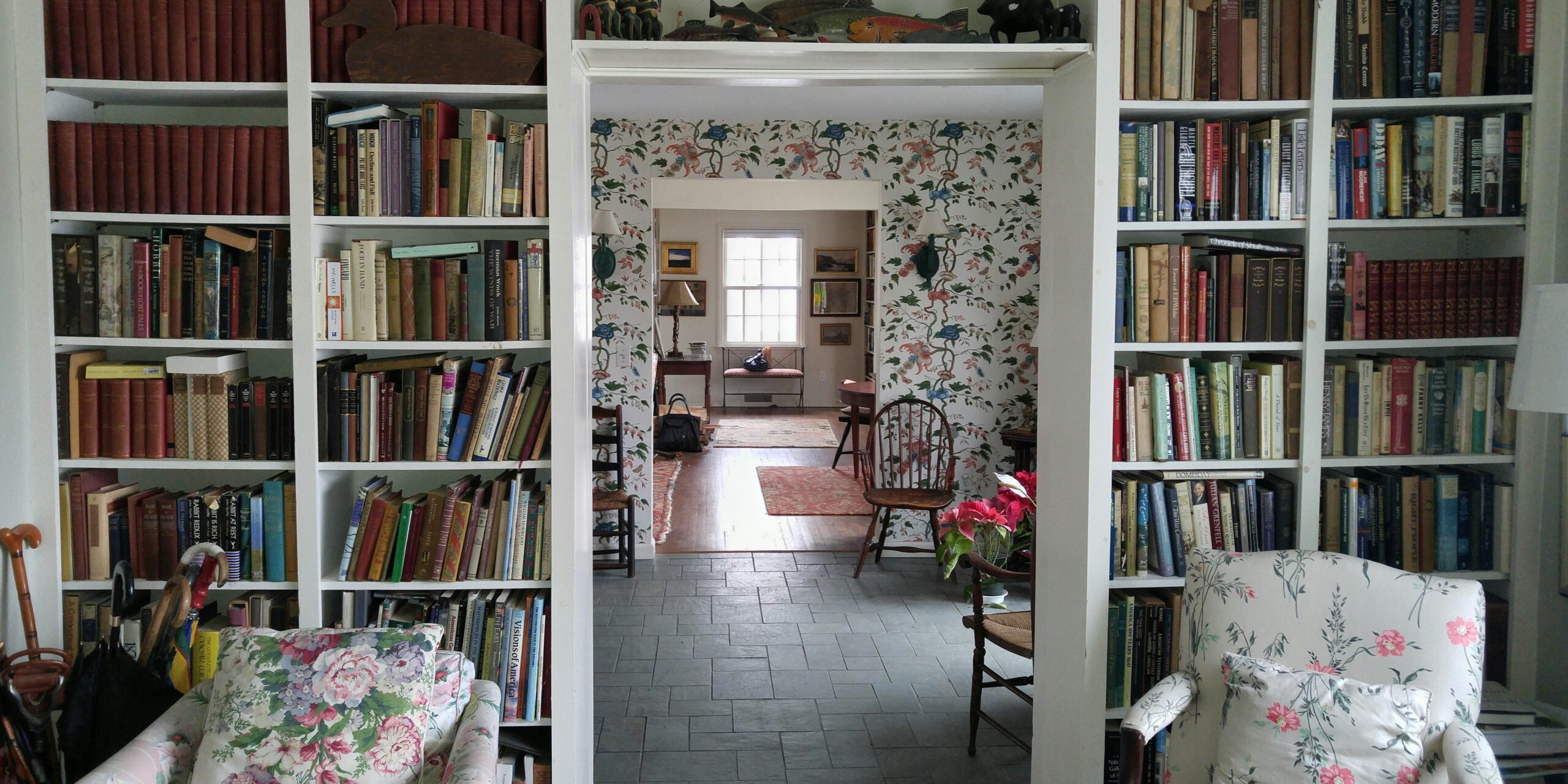
 Martha’s Vineyard — Pulitzer Prize–winning novelist Geraldine Brooks is best known for transporting readers across centuries and continents, weaving deeply human stories out of history, memory, and moral inquiry. In a recent feature, Brooks offered a rare and intimate look into the physical space that anchors her literary life: her expansive personal library, housed in a converted barn on her Martha’s Vineyard property. More than a room filled with books, the library serves as a living map of her intellectual journey and creative process.
Brooks, whose acclaimed novels include March, People of the Book, and Caleb’s Crossing, described the library as both a refuge and a workshop. The barn, transformed into a warm, light-filled space, holds thousands of volumes accumulated over decades of reading, reporting, and writing. Unlike many personal collections organized rigidly by genre or alphabet, Brooks’s shelves reflect a more intuitive logic. Books are grouped according to what she calls “conversations” between authors and ideas, allowing unexpected connections to emerge organically.
This unconventional system mirrors Brooks’s approach to storytelling, which often brings together disparate historical threads to illuminate universal human experiences. A shelf might place a 19th-century novel beside a modern work of nonfiction, not because they share a category, but because they grapple with similar questions of faith, exile, or moral courage. For Brooks, this arrangement keeps her thinking fluid and her imagination engaged, reminding her that literature is a continuous dialogue rather than a fixed canon.
The library also holds deeply personal significance. Brooks pointed to well-worn childhood books that helped spark her love of reading, including classic novels that shaped her sense of narrative and character at an early age. These volumes, many marked with notes or creased pages, are not preserved as pristine artifacts but as living companions that have traveled with her through different stages of life. Their presence underscores how formative reading experiences continue to echo in her work decades later.
Brooks’s career began in journalism, including years as a foreign correspondent, and that background is evident in the range of nonfiction lining her shelves. History, biography, theology, and cultural studies sit alongside novels and poetry, reflecting the research-intensive nature of her fiction. For each novel, Brooks immerses herself in the intellectual world of her characters, often reading widely across disciplines to capture the texture of a particular time and place. The library, she noted, allows her to move seamlessly between sources, drawing inspiration from both factual accounts and imaginative literature.
Family and memory also play a central role in how Brooks relates to her books. Some shelves hold volumes inherited from loved ones or acquired during pivotal moments in her personal life. These books carry emotional weight beyond their content, serving as reminders of relationships and experiences that have shaped her worldview. Brooks spoke about how grief, love, and resilience—recurring themes in her novels—are reflected not only in the stories she tells but in the books she keeps close.
The feature highlighted how Brooks’s home library challenges the notion of a writer as someone who works in isolation. Instead, her space emphasizes connection: between past and present, between different cultures, and between writers across generations. By organizing her collection around intellectual kinship rather than rigid categories, Brooks creates an environment that encourages curiosity and cross-pollination of ideas. It is a space designed not just for quiet reading, but for active thinking.
Read Also: https://todaysread.com/major-book-deals-highlight-promising-memoirs-and-fiction-for-2025-and-beyond/
Brooks also reflected on the evolving role of physical books in an increasingly digital world. While she acknowledges the convenience of digital research tools, she expressed a deep attachment to the tactile experience of books—the feel of paper, the visual memory of a spine on a shelf, the serendipity of discovering a forgotten volume while searching for another. For her, the physical presence of books fosters a sense of continuity and grounding that is essential to sustained creative work.
The library’s setting on Martha’s Vineyard adds another layer of meaning. Removed from urban literary centers, the space offers Brooks a measure of solitude that supports deep concentration. Yet it is not isolated from the world. The books themselves connect her to global histories and voices, allowing her to inhabit multiple perspectives even while working in a quiet, rural environment. This balance between retreat and engagement has been a defining feature of her writing life.
In discussing her collection, Brooks emphasized that the library is never static. New books enter, others are revisited, and relationships between texts shift as her own interests and experiences evolve. In that sense, the space functions as a mirror of her intellectual growth, documenting not just what she has read, but how her thinking has changed over time. It is both an archive and an ongoing experiment.
For readers familiar with Brooks’s novels, the library offers insight into the roots of her narrative craft. Her ability to render historical figures with emotional immediacy, to explore moral complexity without didacticism, and to draw connections across time is reflected in the breadth and organization of her reading life. The shelves reveal a writer deeply attentive to the voices of others, past and present, and committed to listening before speaking through fiction.
By opening her home library to view, Brooks offered more than a glimpse into her personal space. She provided a meditation on how a life of reading shapes a life of writing, and how books can serve as companions, teachers, and witnesses to one’s inner evolution. The feature ultimately portrayed the library not as a backdrop, but as a central character in Brooks’s creative story—one that continues to influence the work of a writer whose stories resonate far beyond its walls.