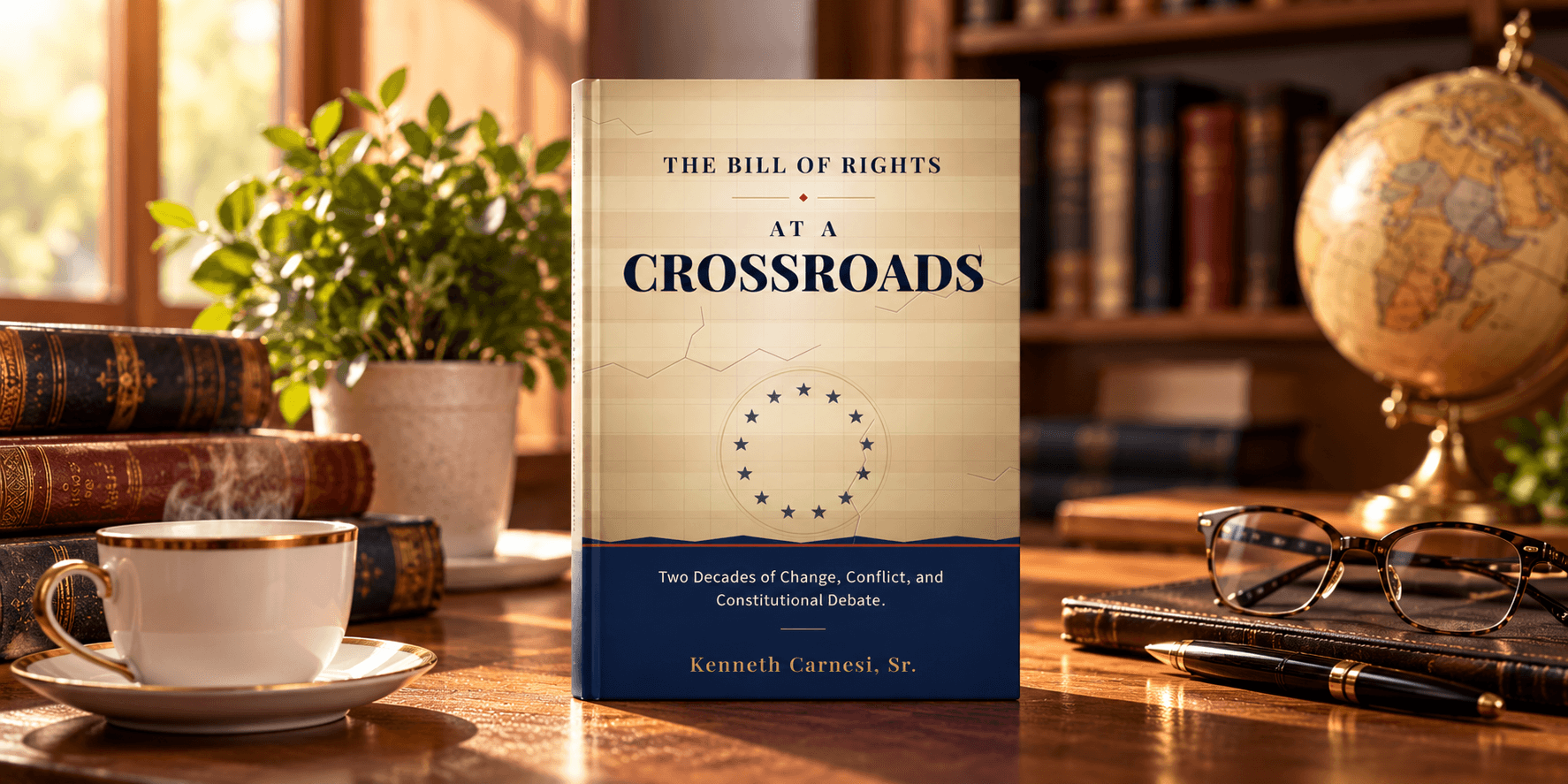
Kenneth Carnesi Explores How Two Decades Of Change Have Redefined The Bill Of Rights In New Book
In The Bill of Rights At A Crossroads, Kenneth Carnesi examines how court rulings, technology and national challenges shape constitutional freedoms.
The Bill of Rights has remained a cornerstone of American democracy for more than two centuries, yet the way its protections are interpreted and applied continues to evolve. From the privacy of personal smartphones to freedom of expression on digital platforms, constitutional questions have taken on new significance in everyday life. In his book, The Bill of Rights At A Crossroads, author Kenneth Carnesi examines how legal decisions, technological progress and national challenges have influenced the first ten amendments over the past twenty years. His work offers readers an opportunity to understand how constitutional protections can change in practice even when their original wording remains untouched.
As the United States Supreme Court continues to interpret constitutional principles through new cases, understanding the reasoning behind those decisions has become increasingly important. Carnesi approaches this subject by examining the legal standards used by courts, the arguments presented by opposing sides and the differences between rights established in law and their practical enforcement. Rather than promoting a particular interpretation, the book encourages readers to examine the evidence and develop their own informed perspectives.
Kenneth Carnesi Presents A Comprehensive Examination Of Constitutional Rights
Organized into three major sections and sixteen chapters, The Bill of Rights At A Crossroads provides a structured exploration of constitutional law, beginning with its historical foundations and progressing toward contemporary challenges.
The opening section, The Framework, covers Chapters 1 through 3 and introduces the fundamental protections established by the Bill of Rights. It examines the responsibilities of courts, lawmakers, government agencies, individual states and citizens in maintaining these protections. The section also explains incorporation, the legal process through which many federal constitutional protections became enforceable against state governments.
The second section, Rights Under Pressure, spans Chapters 4 through 12 and explores the constitutional issues that have gained attention in recent decades. Topics include freedom of speech and protest, online expression, government influence over digital platforms, religious exemptions and emerging concerns surrounding digital surveillance and facial recognition. Carnesi also examines police encounters, body camera technology, the use of force, detention policies and emergency government authority. Additional chapters address access to legal representation, plea negotiations, court fines, sentencing practices, solitary confinement, capital punishment, firearm regulations and the constitutional significance of the Ninth and Tenth Amendments.
The final section, How Rights Change, includes Chapters 13 through 16 and considers the forces that influence constitutional interpretation over time. These include judicial precedent, appointments to the federal judiciary, technological developments that move faster than existing laws and the lasting effects of national emergencies. Carnesi also explores how journalists, legal advocates, individuals pursuing litigation and voters contribute to public understanding and the protection of constitutional freedoms.
A concluding chapter considers which rights have experienced stronger protections, where significant concerns remain and what decisions may influence constitutional law over the next twenty years.
A Distinct Approach To Understanding Supreme Court Decisions
One of the central features of The Bill of Rights At A Crossroads is its emphasis on the reasoning behind judicial decisions rather than the public attention surrounding them. Carnesi distinguishes between the legal principles necessary to resolve a case and the broader discussion contained in judicial opinions. He also considers how subsequent decisions can modify, limit or overturn earlier interpretations.
The book examines influential Supreme Court cases, including Gideon v. Wainwright, Mapp v. Ohio, Riley v. California, Carpenter v. United States, Kennedy v. Bremerton School District and New York State Rifle & Pistol Association v. Bruen. By placing these decisions within their legal context, Carnesi helps readers recognize how constitutional principles are applied to different circumstances.
Another important element is the distinction between constitutional language, judicial interpretation and actual enforcement. A protection written into the Constitution does not always produce the same outcome in a courtroom, police station or educational institution. The book addresses this difference by examining access to legal counsel, inconsistencies in enforcement and the limitations of available legal remedies.
Throughout the discussion, Carnesi maintains an approach designed to present competing legal perspectives. Majority opinions, dissenting arguments and the positions of advocates on different sides of constitutional disputes receive attention. This method allows readers to evaluate the reasoning themselves instead of being directed toward a predetermined conclusion.
Each chapter also includes a practical case study and a significant judicial decision, giving students, educators and other readers reference material they can revisit when studying constitutional issues.
The Motivation Behind Kenneth Carnesi's Latest Work
For Carnesi, the importance of understanding constitutional rights extends beyond legal scholarship. His book focuses on the ways judicial interpretations can affect ordinary people during encounters with law enforcement, interactions with public institutions, and efforts to exercise fundamental freedoms.
“The words of the Bill of Rights have stayed on the page since 1791,” said Carnesi. “What has changed is who reads them, how they read them, and what those readings mean for a person standing at a traffic stop or a courthouse door. I wrote this book so readers could see the reasoning on every side and decide for themselves.”
This perspective reflects the book's broader objective of making complex constitutional discussions more accessible without overlooking the legal details that shape important decisions.
The material is intended for attorneys, law students and individuals preparing to study law, as well as educators teaching civics, government and constitutional principles. Journalists, policymakers and civil liberties advocates may also find value in its examination of legal developments. Beyond professional audiences, the book is written for citizens seeking a clearer understanding of the constitutional questions frequently discussed in national news.
Kenneth Carnesi Brings His Writing Experience To Constitutional Commentary
Kenneth Carnesi, Sr., serves as Chief Operating Officer of Anaptyx MSP and is the founder of the Anaptyx CivicConnect™ dedicated BEAD Program team. Alongside his professional responsibilities, he has developed a body of published work covering public policy, business and inspirational subjects.
His previous titles include BEAD: Unlocking the Future, recognized as Best Broadband Policy & Strategy Book by USToday Magazine in August 2026, and Collateral Courage. Carnesi has also been named the Best Business Guidebook Author in South Carolina and the Best New Inspirational Book Author in South Carolina.
His other literary recognitions include a Literary Titan Gold Book Award for After The Fall and an International Impact Book Award for Unfinished Business.
With The Bill of Rights At A Crossroads, Carnesi applies his accessible writing approach to constitutional law, combining historical context, judicial analysis and practical examples to help readers explore the issues influencing American public life.
Discover How Constitutional Rights Continue To Evolve
As technology advances and courts continue to address new constitutional disputes, understanding the relationship between established rights and modern legal interpretations remains valuable. The Bill of Rights At A Crossroads provides a resource for readers interested in examining those developments through a balanced discussion of constitutional principles, court decisions and real world applications.
The book is currently available in paperback through Kenneth Carnesi's book collection and his official author website. Readers interested in constitutional history, legal analysis and the future of civil liberties can explore the publication through these platforms. Review copies and author interviews are also available upon request.

Today’s Read Contributor
Desmond Clarke
Covers the publishing industry and narrative nonfiction, from acquisitions and imprints to the biographies readers are talking about.
This article features partner, contributor, or branded content from a third party. Members of the Today’s Read editorial staff were not involved in the creation of this content. All views and opinions are those of the contributor alone.
A. N. Jones Turns Handwritten Pages Into Worlds