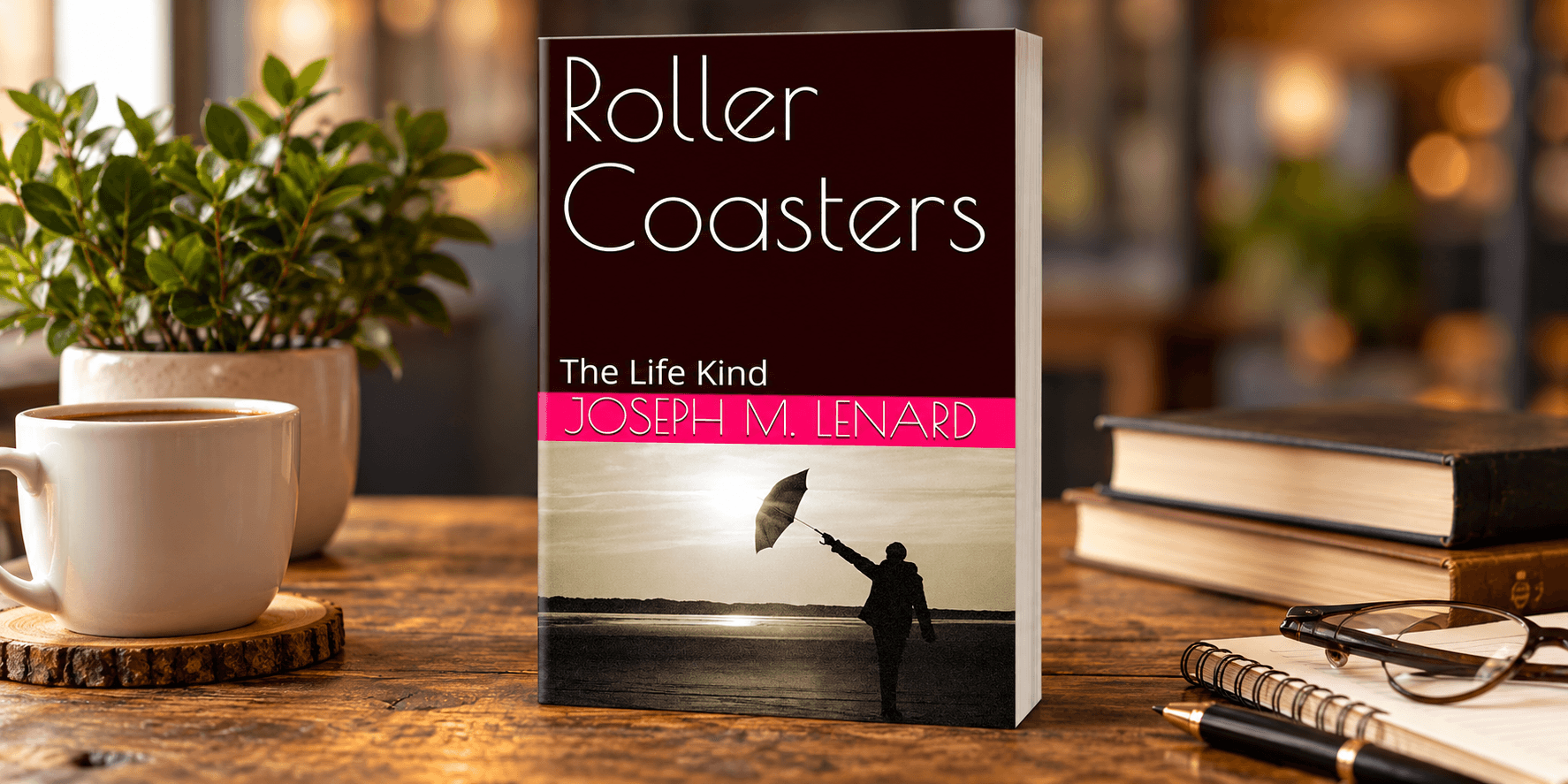
Joseph M. Lenard’s Roller Coasters: The Life Kind Explores Grief, Love, And The Need To Still Keep Living Yourself
Through loss, regret, and faith, Joseph M. Lenard explores how love can endure even when life takes an unexpected and painful turn.
Grief can change everything in a single moment. One conversation, one decision, or one unexpected tragedy can divide life into what came before and what follows. In Roller Coasters: The Life Kind, aka: RC:TLK abbreviation; author Joseph M. Lenard explores this painful reality through a deeply personal story about love, loss, regret, and the difficult journey toward acceptance. As part of his “Life and Living” series; each its own stand-alone story with a unique and separate lead character from each of the others in the same series all dealing with varying aspects of life and living; the book invites readers to consider how people respond when life suddenly changes and how the memories of those they love can inspire them to keep moving forward. Rather than offering simple answers to complicated emotions, Lenard presents grief as an unpredictable journey filled with moments of despair, reflection, faith, and renewed purpose.
Joseph M. Lenard’s Roller Coasters: The Life Kind Begins With An Unexpected Tragedy
Lenard uses Rick’s experience to examine one of grief’s most difficult dimensions: the desire to revisit the past and change what cannot be undone. Rick struggles with the things he said, the things he left unspoken, and the possibility that he failed to appreciate the person who believed in him the most. His attachment to Nevaeh remains visible in the smallest details of daily life. He keeps her phone so he can hear her voicemail greeting, searches for comfort in familiar songs, and notices the painful absence of her presence in places they once shared. These ordinary reminders become powerful symbols of a love that continues even after death. Through Rick, Lenard shows how mourning can involve both the fear of forgetting someone and the struggle to build a life beyond the moment of loss.
Finding Meaning In Life’s Emotional Roller Coasters
The title Roller Coasters: The Life Kind reflects the book’s central metaphor: life rarely follows a smooth or predictable path. Lenard draws on familiar amusement park rides to illustrate the emotional experiences people encounter during periods of hardship. Roller coasters represent sudden changes, unexpected setbacks, and the turbulence of relationships. Ferris wheels and carousels reflect the exhausting sensation of returning to the same memories and emotions without feeling any closer to resolution. Tilt A Whirls suggest confusion and emotional instability, while bumper cars symbolize the conflicts and collisions that shape human relationships. These comparisons give readers a familiar way to understand Rick’s complicated inner world. More importantly, they suggest that moving forward requires more than simply waiting for painful feelings to start to ease, begin to fade a bit, while never truly going absent. It involves recognizing emotional patterns, accepting uncertainty, and finding reasons to remain engaged with life.
Rick begins to consider whether his grief can become a source of greater understanding and purpose. A spiritual dimension adds depth to the story by connecting personal loss with broader questions about meaning, character, and the responsibilities people carry toward themselves and others. For readers who appreciate fiction that examines emotional struggles through a spiritual perspective, Lenard offers a narrative grounded in reflection rather than easy reassurance.
A Distinctive Storytelling Style That Reflects The Experience Of Grief
One of the defining characteristics of Roller Coasters: The Life Kind is its unconventional narrative structure. Instead of presenting grief as a series of orderly stages, Lenard allows Rick’s thoughts to move through memories, associations, music, and repeated reflections. Songs and familiar lyrics serve as emotional reminders, bringing the past into the present and revealing how deeply Nevaeh remains connected to Rick’s everyday experiences. Lenard has described the musical references as functioning much like a film score, helping establish the emotional atmosphere of the story. The narrative's recurring thoughts and shifting focus also reflect the way grief can interrupt ordinary thinking. By embracing this approach, Lenard creates a reading experience that places greater emphasis on Rick’s internal struggles than on traditional plot development.
The book’s final chapter, “Onward,” offers a particularly meaningful example of this approach. Rick awakens from another nightmare, and exhausted. Yet the chapter gradually turns toward the ordinary details of daily life. He thinks about allergy medicine, coffee, and the possibility of having a donut. These seemingly small moments suggest that life continues even when emotional recovery remains incomplete. Eventually, Rick begins considering a more meaningful project: writing a book that could preserve Nevaeh’s memory (her forever and ongoing lasting legacy) and share something of her influence with others. He also considers seeking guidance from a friend. These modest decisions represent an important shift. Rick has not escaped grief, but he is beginning to imagine how love might inspire action instead of remaining confined to sorrow.
How Joseph M. Lenard Connects Loss With The Courage To Live Fully

At the heart of Roller Coasters: The Life Kind is Lenard’s exploration of the philosophy of “Carpe Diem,” or seizing the day; ongoing cross-over sub-theme throughout all the life and living series of books. Within Rick’s story, this idea is not presented as a demand to ignore suffering or pursue constant happiness. Instead, it becomes a reminder that the time people have is meaningful precisely because it is uncertain - short, or long, never assured. Rick must decide whether to remain trapped in the circumstances of Nevaeh’s death or allow his memories of her to influence the person he becomes. His emerging interest in writing suggests a path toward honoring their relationship through creativity, remembrance, and renewed engagement with the world. Lenard leaves room for unresolved emotions, acknowledging that personal growth, or the grief stage of “acceptance,” does not erase the importance of what has been lost.
Discover A Story About Carrying Love Forward
For readers drawn to reflective fiction, emotionally complex characters, and stories that explore the relationship between faith and personal responsibility, Joseph M. Lenard’s Roller Coasters: The Life Kind offers an intimate examination of what it means to continue living after profound loss. Its strength lies in its refusal to portray healing as a simple destination. Rick’s journey suggests that grief and love can remain connected even as a person discovers new reasons to move forward.
Through its unusual narrative style, recurring amusement park imagery, and emphasis on remembrance, the book encourages readers to consider how difficult experiences can reshape their understanding of life and the people who matter most. Readers can explore the sneak peek at the BookTrib review of Roller Coasters: The Life Kind for additional insight into the novel’s themes of grief, faith, and perseverance.
To learn more about Roller Coasters: The Life Kind, discover Joseph M. Lenard’s other literary works, and connect with the author, visit his official Linktree page. Discover a story that asks a lasting question: How can someone honor the love they have lost while finding the courage to embrace the life that remains?
Check out, too, the other books in the Life and Living series: following Marten in Terror Strikes: Coming Soon to a City Near You (yes, about terrorism, but not about death and destruction, but life and living); Kennedy, a female lead, in The Book of Kennedy: Project Carpe Diem; Ryan, in the uniquely written journal-entry style of A Lasting Legacy; and Franklin, navigating relationship complications in Complicated. All of these books came prior to RC. However, and again, each book in the Life and Living series deals with varying aspects of life and living and is a standalone read, independent of all the others in the series of manuscripts.
The author also wishes to note something many may not realize about eBooks (electronic books). RC is currently available solely as an eBook or audiobook and is not available in print, unlike the other books in the Life and Living series. Like the others, it can be obtained through Amazon. What many may not realize is that one does not have to have, own, or operate a physical, Amazon Kindle-branded device to read an eBook obtained through Amazon (whether this author's or any other author's electronic books). Across most book retailers' platforms, including Amazon, Barnes & Noble, Apple, and others, eBooks are available in EPUB format and can be downloaded to compatible digital devices and read using an available (often free) eReader application or program.
This form of book makes a great e-gift, especially with the gift-giving season around the corner! It's a quick and easy option for early gift-giving or even last-minute gifting. Remember someone's birthday at the last minute? Need an early Christmas gift—or a virtual stocking stuffer to tack on at the last minute? Want to send a simple “thinking of you” gift for no particular reason? Or perhaps a Happy New Year gift? You can purchase an eBook, which will be

Today’s Read Contributor
Harriet Nyong'o
Covers authors and their working lives, profiling the writers behind the year's most discussed books.
This article features partner, contributor, or branded content from a third party. Members of the Today’s Read editorial staff were not involved in the creation of this content. All views and opinions are those of the contributor alone.