
Alex Abuyuan and the 4% That Could Change Everything
A new chapter in an author’s life asks whether meaningful change starts with fewer, more deliberate choices.
The day ends with a finished task list and a question that will not settle. You have met deadlines, answered messages, and kept your commitments. Yet the work that filled your hours may not reflect what matters most to you. That gap between being busy and living with purpose sits at the heart of The 4% Life: The Vital Few Choices That Change Everything. For author Alex Abuyuan, it is a question shaped by decades of leadership, family life, setbacks, and starting again.
The 4% Life Begins With A Different Question
Abuyuan comes to that question with a background that might suggest a more familiar book about achievement. He graduated from the United States Air Force Academy, served as an Air Force officer, and founded ABN Financial Group in 1999. He has spent more than twenty-five years building and leading that business. Those experiences provide context for his work as an author, but they are not its central point. His book looks beyond what people accomplish to ask what their accomplishments serve.
That distinction grew from lessons that professional milestones alone could not supply. In the account behind his book, Abuyuan describes learning that success and fulfillment are not the same. Fear can shape a choice before a person notices it. An unresolved hurt can claim attention that belongs elsewhere. Meanwhile, the people closest to us can receive whatever time remains after work. These are not problems solved by adding another goal. They call for a closer look at the goals already in place.
As a husband and father of five, Abuyuan brings family life into that reflection alongside military service, entrepreneurship, and faith. His message leaves room for both ambition and care, rather than treating them as rivals. The issue is where effort goes and whether that effort reflects a person’s values. A full calendar may show commitment, but it cannot, by itself, show that someone has chosen well. That requires a more personal and sometimes less comfortable kind of honesty about daily life.
The framework behind The 4% Life starts with the Pareto principle, often called the 80/20 rule. Abuyuan applies the idea twice: first, consider the priorities that matter most; then identify the most important priorities within that group. Twenty percent of 20 percent is 4 percent. He uses that figure as a practical lens for focus, not a scientific formula for human behavior. It does not mean every life can be measured this way, or that a precise share of choices determines a fixed result.
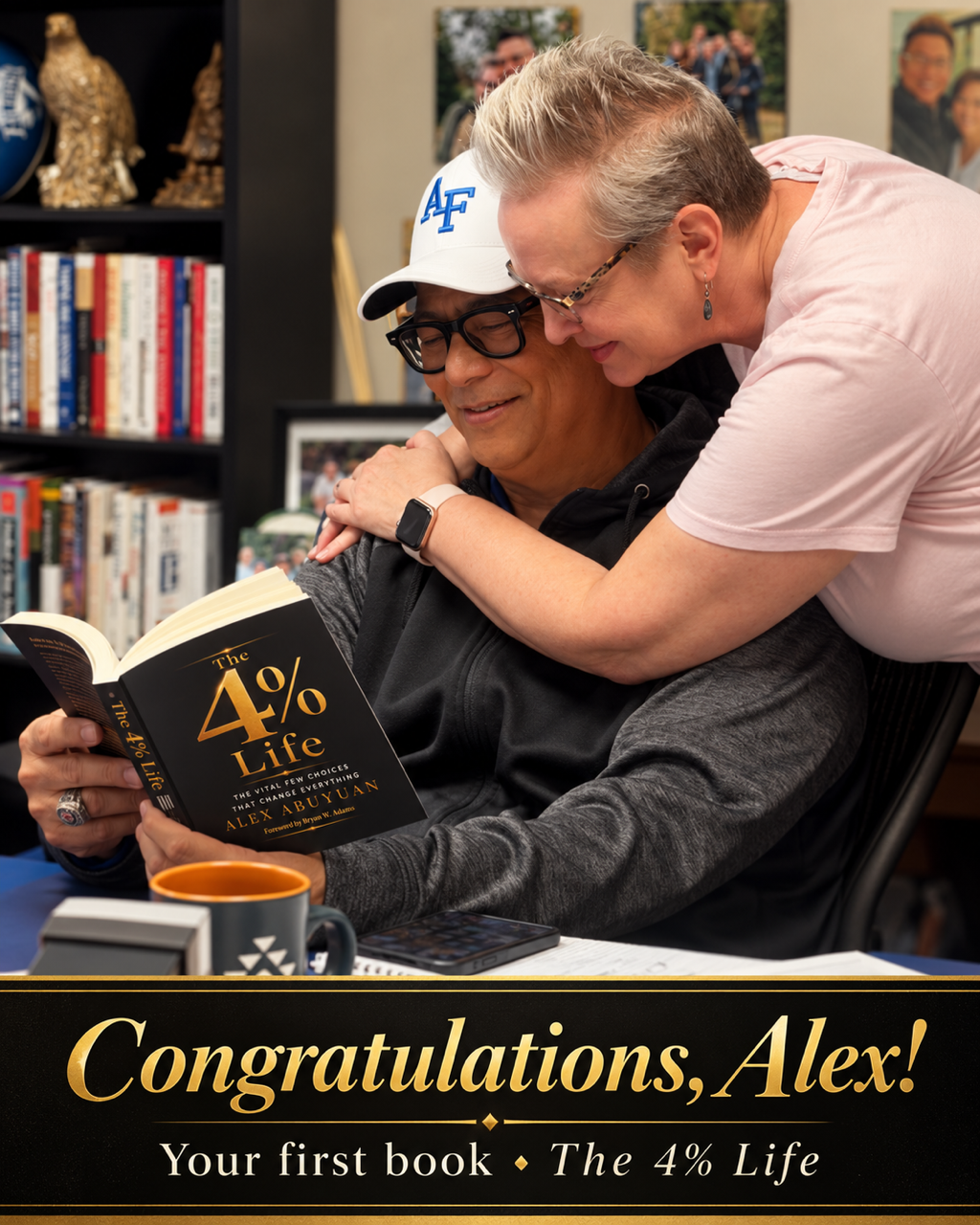
Putting The Vital Few Into Practice
The distinction matters because the book does not argue for giving less effort. Instead, it asks readers to direct steady effort toward choices that deserve it. A person might need to have a difficult conversation, protect time for a close relationship, or take one considered step toward a new chapter. These are examples of the kinds of decisions the framework invites readers to weigh, not prescribed answers. What matters most will differ from one life, and one season, to the next.
This approach also changes the starting point for personal growth. A complete overhaul can feel so large that a person never begins. A single meaningful choice is easier to name, though it may still take courage to act on it. The 4% Life places purpose, forgiveness, resilience, relationships, and faith within that conversation. Productivity has a place, but it is not the final measure. The broader question is whether daily actions are helping build a life the reader can recognize as their own.
The book pairs personal stories with reflection and exercises. That format gives readers a reason to pause rather than simply collect ideas. Allan Talib, in a reader testimonial supplied among the book’s endorsements, describes that experience: “The 4 Percent Life made me stop and seriously look at where I was going, what I was prioritizing, and what really mattered most.” His words describe one reader’s response, not an independently measured outcome or a promise of what others will experience from reading the book.
Talib’s account points to a useful distinction between understanding a message and working with it. It is possible to agree that relationships matter while leaving them last on the calendar. It is possible to value courage while putting off a decision out of fear. Reflection brings those gaps into view. Consistent action, rather than the percentage itself, gives the framework its practical meaning. The aim is not to make every choice perfect, but to become more deliberate about the choices that carry the most weight.
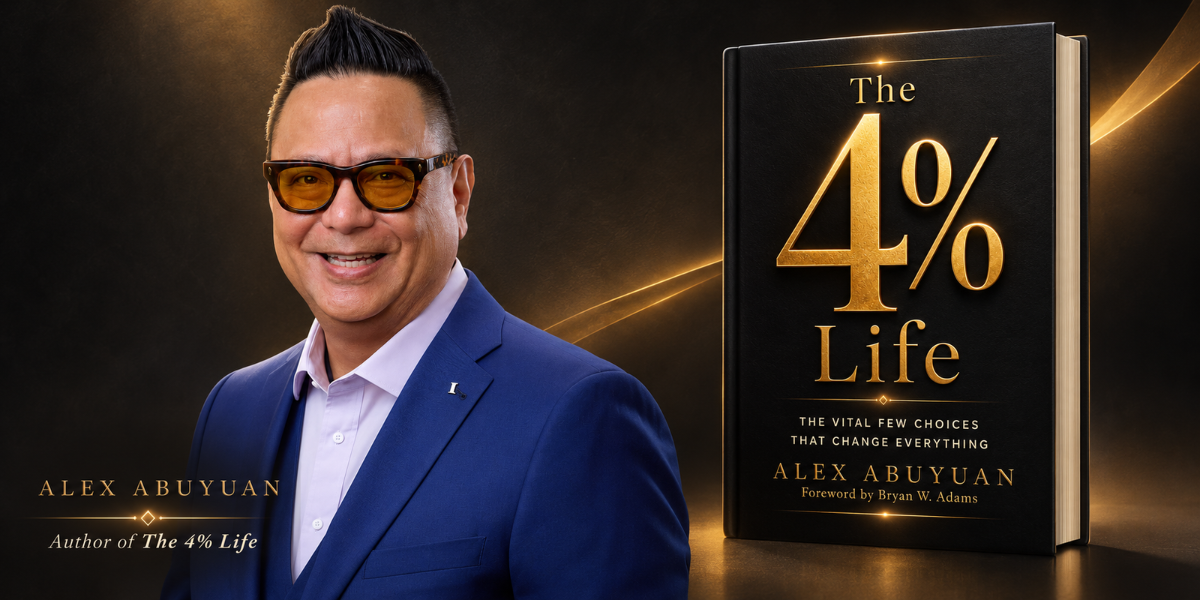
A New Chapter, Not A Finished Story
Abuyuan’s own move into authorship gives that idea a human setting. Publishing the book after decades in business and leadership meant opening a new chapter rooted in extensive professional experience. He did not have to dismiss that earlier life to make room for something else. Instead, it became part of what he could bring to readers. His experience offers a grounded perspective on reinvention: a new direction can draw on the past without requiring someone to remain defined by it.
That perspective may resonate with people whose next step is not clear. A career milestone, a setback, or a shift in responsibilities can unsettle an old sense of purpose. The book does not suggest that such moments are simple, or that one choice removes every obstacle. Its premise is more modest and more usable. Before trying to change everything, a reader can examine what deserves attention now. That question creates space for thoughtful movement without demanding a complete plan for the years ahead.
Group coaching, workshops, and speaking extend the conversation beyond the page. They form part of Abuyuan’s broader work, while the book remains its foundation. For individuals, the subject is how to turn reflection into a purposeful next step. For organizations and event planners, it offers a discussion about focus, values, and choices that reaches beyond a longer task list. These extensions fit the central message when they keep attention on practice, rather than treating inspiration as an end in itself.
Readers can explore The 4% Life through the official book website to learn more about the book and consider how its questions relate to their own priorities. Those interested in a shared discussion can also inquire about group coaching or speaking. The starting point is not a demand to become a different person overnight. It is an invitation to look closely at the life already taking shape, identify what deserves greater care, and consider one meaningful choice to make next.
Explore The 4% Life: Book, Workbook, and Coaching
Readers who want to take a deeper step into the principles of intentional living can explore additional resources from Alex Abuyuan. Whether purchasing a personally signed copy of the book, working through the companion workbook, or considering personal coaching, each resource offers another way to engage with the ideas behind The 4% Life.
- Get a Personally Signed Copy of The 4% Life
- Explore The 4% Life Companion Workbook
- Schedule a 30 Minute Coaching Discovery Call: Book Your Discovery Call
The 4% Life Earns National Recognition for Intentional Living
Alex Abuyuan’s The 4% Life has received the 2026 Best Personal Development Book for Intentional Living in the United States award from Best of Best Review. The recognition celebrates its fresh perspective on purposeful living, practical prioritization framework, and meaningful lessons on resilience, courage, faith, and personal growth.
Explore More About The 4% Life
Connect with The 4% Life, Alex Abuyuan on LinkedIn, Alex Abuyuan, Author and Speaker, and The 4% Life on Instagram.

Today’s Read Contributor
Desmond Clarke
Covers the publishing industry and narrative nonfiction, from acquisitions and imprints to the biographies readers are talking about.
This article features partner, contributor, or branded content from a third party. Members of the Today’s Read editorial staff were not involved in the creation of this content. All views and opinions are those of the contributor alone.