
Mitolux And The Missing Language Of Light
Gerardo Gutiérrez turned a personal study of sunlight into a new category of home wellness technology.
Gerardo "Guti" Gutiérrez had spent two decades chasing light through a camera lens before he began to wonder what light was doing to him. As a professional photographer, he knew how morning sun softened a face, how color changed a room, and how a fraction of a second could alter an image. Yet in 2020, during a season of exhaustion, emotional strain, and personal upheaval, light stopped being an artistic tool and became a question. Each morning, he stepped outside for unfiltered sun. The ritual was simple, but the shift in his daily life felt significant enough to send him looking for evidence. That search became the foundation of Mitolux light wellness, a Dallas-based company built around a practical idea: modern life has removed much of the natural light signal the human body evolved with, and indoor wellness technology should reckon with that gap.
Mitolux Light Wellness Began With A Morning Habit
Mitolux began with a founder who did not start in a laboratory, but arrived there by obsession. Gutiérrez had built his career around light as composition, contrast, and emotion. After his personal turning point, he began studying light as biology. Over three years, he reviewed more than 7,000 peer-reviewed studies and translated what he learned into Rewired by Light, a protocol-based book designed to make the science of daily light exposure more accessible to ordinary people. The work was educational, not clinical, but it sharpened a conviction that would guide the company: wellness conversations often focus on what people consume, while paying too little attention to the environmental signals they receive.
That distinction matters because supplementation and light exposure are not the same experience for the body. Oral products may have a place in personal routines, but light-mediated processes operate through pathways that depend on specific wavelengths, timing, and exposure context. In Gutiérrez's view, the wellness market had become fluent in red light therapy, yet quiet about one missing piece. Millions of consumers were buying red and near-infrared panels, but those panels did not include UVB, the band of light associated with the body's natural vitamin D synthesis pathway during responsible sun exposure. Mitolux light wellness was built to address that overlooked category, while remaining firmly in general wellness and lifestyle territory.
The Light Gap Mitolux Light Wellness Saw First
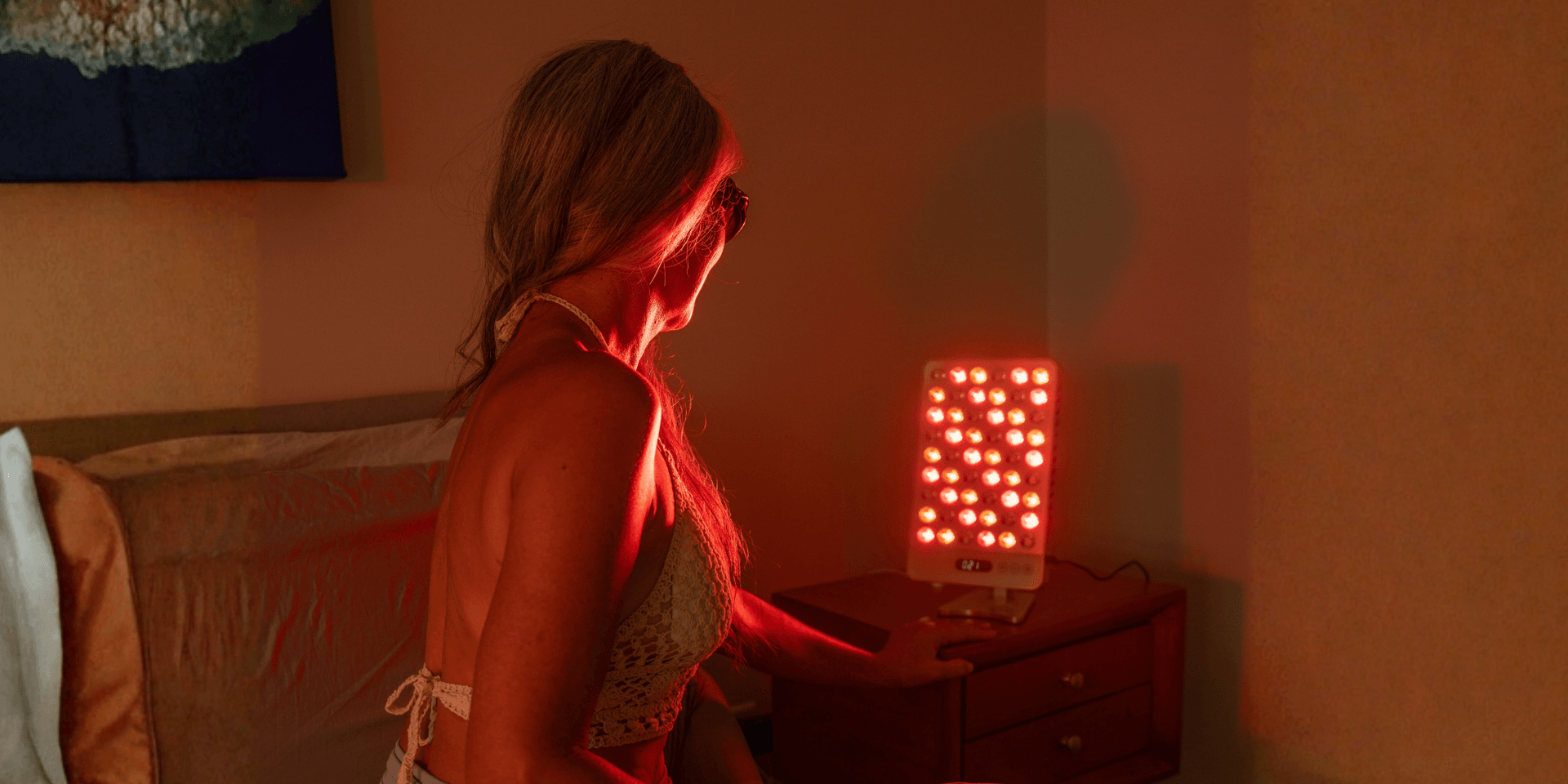
The BTS2, Mitolux's flagship device, was designed around that gap. It combines narrowband UVB at 295 nm, red light at 630 nm, and near-infrared light from 810 to 940 nm in one portable home-use panel. Standard red and near-infrared devices may support a light-based wellness routine, but they do not include UVB. The BTS2 approaches light more as a spectrum conversation than a single-wavelength trend. It is not positioned as a medical device, nor as a promise of specific outcomes. Instead, it gives users a way to bring selected wavelengths associated with natural sunlight into an indoor routine, with individual experiences varying based on many factors.
The choice of LED-based UVB also reflects the company's technical point of view. Rather than relying on fluorescent tubes, Mitolux uses narrowband 295 nm UVB LEDs. The design is intended to deliver targeted photobiological output with a reduced UV dose compared with many tube-based approaches, while avoiding mercury and extending bulb life to an estimated 20,000 hours. Those details matter to consumers who want wellness tools that fit real homes, not just specialist environments. They also speak to the brand's larger philosophy: do not make the user choose between scientific seriousness and practical design.
Price became another defining decision. Comparable multi-wavelength systems can cost several thousand dollars, while the BTS2 is priced at $799, with financing starting at $66 per month and a 30-day risk-free guarantee. That positioning does not make Mitolux a discount brand. It makes the product more accessible within a wellness category that often prices innovation beyond the reach of curious, committed consumers. For Gutiérrez, access is part of the mission. He did not want to create a beautiful device that only a small group could use. He wanted to build a category people could understand, evaluate, and realistically bring into their daily routines.
Why The BTS2 Created A New Category
Mitolux's differentiation is clearest when viewed against the larger red light trend. The market has trained consumers to ask about power, panel size, irradiance, and wavelength counts. Those questions are useful, but they often miss the bigger issue. If a panel includes red and near-infrared light, it may still omit UVB entirely. Mitolux light wellness reframes the conversation by asking whether a home device can better reflect the selected light signals people once received from regular outdoor exposure. That question is not nostalgia. It is a design brief.
The company's message has gained traction with prominent voices in human performance and biohacking. Mitolux has been endorsed by Thomas DeLauer, known for his work in nutrition and performance education with professional athletes; Tim Gray, a leading figure in the United Kingdom biohacking community; Jean Fallacara, CEO of Biohacker Magazine; and Lucas Aoun, an Australian biohacking educator. In 2026, Mitolux received the Forttuna Global Excellence Award in the Innovative Wellness Product of the Year category, a peer-reviewed recognition in the wellness field. The company has also been featured by Evergreen Awards, TodayUS.com, and BizWeekly.com.
Still, the most persuasive part of the Mitolux story is not the award shelf. It is the way Gutiérrez talks about the work. "I did not build Mitolux to sell a lamp," he says. "I built it because I watched a broken body, mine and then my dog's, respond to something as simple as light. That is not marketing. That is biology." The line carries the emotion of a founder who lived the question before he built the product. It also explains why the brand avoids empty futurism. Mitolux is not trying to make light feel exotic. It is trying to make a forgotten input feel understandable again.
These are personal experiences and may not reflect typical results.
That human story now extends into the company's next chapter. Mitolux is preparing Solar X, a 10-wavelength, 11-mode full solar spectrum device now in pre-sale. The product reflects the same belief that guided the BTS2: natural light includes many complementary wavelengths, and responsible design should help people engage with them thoughtfully. The company's tone remains careful, scientific, and warm. It does not claim to diagnose, treat, cure, or prevent disease. It speaks instead to routine, education, environment, and the possibility that better daily inputs can support a more intentional wellness lifestyle.
For readers who already own a red light panel, Mitolux offers a sharper question than "Is my device powerful enough?" The better question may be, "What signal is still missing?" For those building a wellness routine from the ground up, the BTS2 offers a practical way to explore UVB, red, and near-infrared light in one portable format, with education at the center. Visit Mitolux to study the technology, read the protocols, and consider whether a more complete light routine belongs in your home.
Disclaimer: Mitolux is intended for general wellness and self-care use. Individual experiences vary. This content is for informational purposes only and is not medical advice. Mitolux is not intended to diagnose, treat, cure, or prevent any disease. Use only as directed and follow the product's safety instructions. Consult a qualified healthcare professional before use if you have a medical condition, are pregnant, or take medications that increase sensitivity to light.
Explore More About Mitolux
Connect with Mitolux, Instagram, Facebook, YouTube, and TikTok.

Today’s Read Contributor
Desmond Clarke
Covers the publishing industry and narrative nonfiction, from acquisitions and imprints to the biographies readers are talking about.
This article features partner, contributor, or branded content from a third party. Members of the Today’s Read editorial staff were not involved in the creation of this content. All views and opinions are those of the contributor alone.