Doreen Otaru on Growing Up While Writing Seasons of Blooming
Doreen Otaru on the question at the heart of her debut novel, Seasons of Blooming.
There are fish that live so deep in the ocean that sunlight never reaches them. They do not miss the sun. They do not wake up wishing they could see it. As far as they know, darkness is simply what the world looks like. Doreen Otaru kept returning to that image while writing her debut novel, Seasons of Blooming, because she believes people can live in much the same way. We adapt to our circumstances. We learn the dimensions of our lives so well that familiarity begins to resemble happiness, and sometimes we never think to ask whether something better exists because we have never been given the language to imagine it.
That idea became one of the questions beneath Seasons of Blooming: How do you know you are unhappy when unhappiness is the only world you have ever known? Otaru, twenty-one and approaching her final year at the University of Texas at Austin, is quick to admit that she does not know the answer. The novel is not a manual for growing up, nor does she want to position herself as someone who has already done so. “I wrote it because I have many of the same questions,” she explains. Rather than attempting to resolve those questions, Seasons of Blooming allows an eighteen-year-old girl to live inside them.
The Life We Are Afraid to Lose
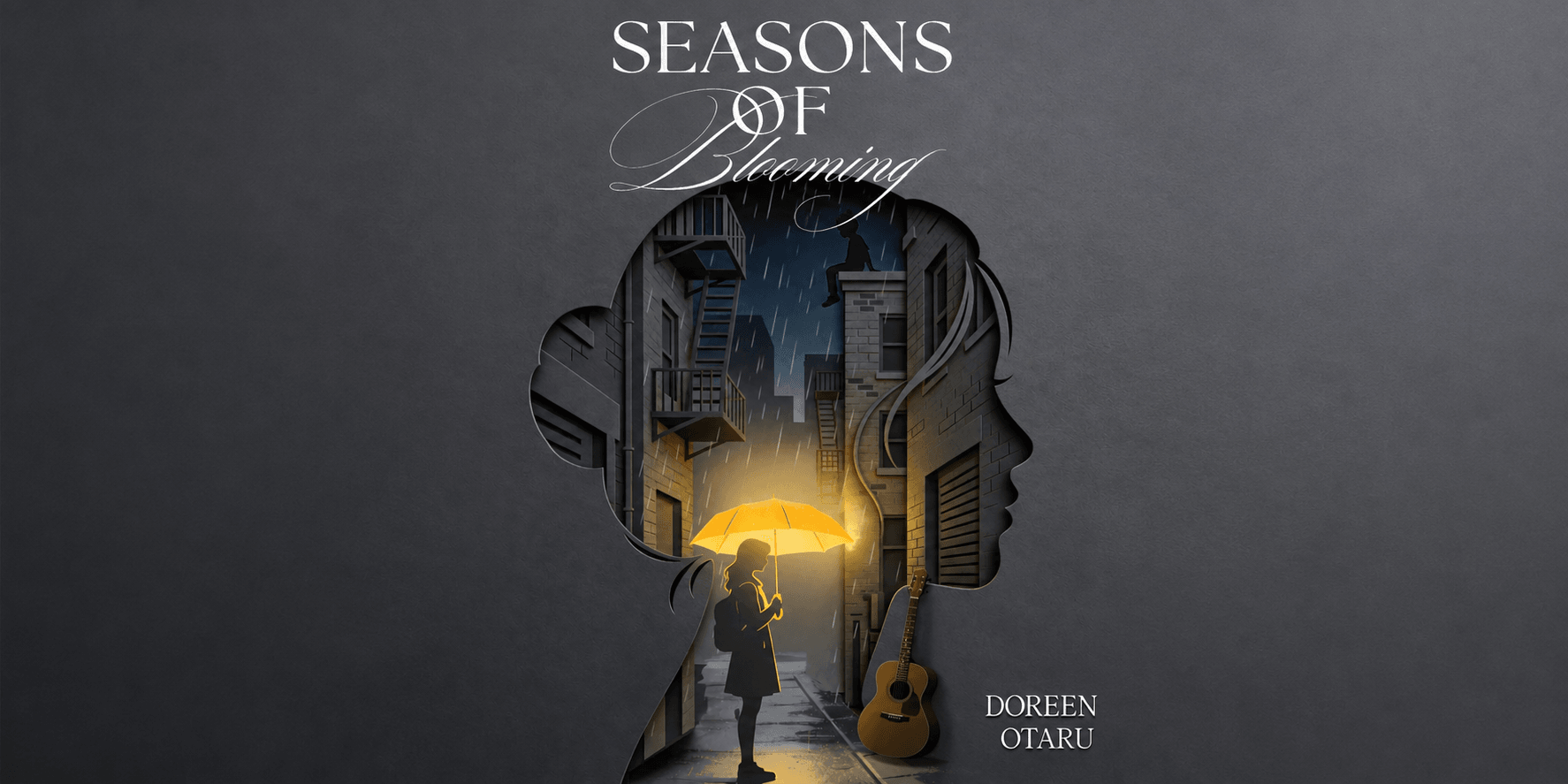
That girl is Solehn, who begins the novel convinced that she should already know who she is and what the immediate future of her life will look like. Instead, her family is unraveling, and she is being pulled away from the New York friends and city that have defined her. She spends her final semester of high school in a wealthy suburb outside Austin, navigating new friendships, parties, loneliness, and a quiet neighbor named Alexander who seems to understand what she will not say aloud. She is leaving behind four girls with whom she had imagined an entire future: prom, graduation, college decisions, and all the ordinary rituals that can sound insignificant until they are the architecture of your life.
At first, Solehn believes the tragedy is that everything is changing. Slowly, however, the novel asks something more uncomfortable. What if change is not the thing destroying her life? What if change is simply the first thing forcing her to look at it? Sometimes we can spend so much energy mourning the life we are losing that we never stop to ask whether that life was making us happy in the first place. The familiar can feel safe even when it is painful because, like the fish at the bottom of the ocean, we have nothing against which to measure it.
Letting Young Women Be Wrong
That uncertainty extends to Solehn herself. Otaru did not write her to be universally likable and, in fact, expects some readers to dislike her. Solehn makes bad decisions. She says things she should not say. She hurts people and is hurt by them. She can be selfish and loving, immature and perceptive, sometimes within the same chapter. Otaru’s favorite color is gray, and the preference feels almost fitting for a writer so interested in the space between easy moral categories. She is less interested in making her female characters defensible than in making them recognizable.
“I want readers to look at them and say, what is she doing? Why would she say that? That was not okay,” Otaru explains. She wants that discomfort to remain unresolved for a while because people rarely make choices that are perfectly narratively defensible. They are impulsive and contradictory. They can love someone and still hurt them. They can understand that something is wrong and choose it anyway. Solehn is not exempt from those contradictions simply because she is the protagonist.
Why “Now” Matters
Somewhere between judging Solehn’s choices and watching her live with them, however, Otaru hopes readers remember that she is eighteen. She is a young woman being asked to become an adult without having access to the wisdom of the person she might someday become. That tension appears most clearly in an exchange between Solehn and her father. He tells her, “All your problems are wrapped in things that won’t matter in three years.” Solehn responds, “But they matter now. And now is where I am.”
That distinction is central to the novel. Seasons of Blooming never argues that young people’s problems are insignificant simply because they are temporary. Something does not have to matter forever to matter enormously now. At eighteen, losing your friends can feel like losing your entire world because, in some ways, you are. The world you understood has ended. Knowing that another one will eventually replace it does not make the ending painless.
The mistake adults sometimes make is confusing impermanence with insignificance. A friendship may eventually become a distant memory and still have once constituted an enormous part of a person’s life. A terrible decision at eighteen may appear obvious in retrospect while having felt completely rational to the eighteen-year-old who made it. Solehn cannot borrow the perspective of her future self. She has to survive her problems as the person she is now.
The Person Waiting on the Other Side
That idea has become increasingly personal for Otaru as she approaches the end of college. She once assumed growing up meant eventually reaching an age when life stopped feeling uncertain. At eighteen, that age seemed to be college. Once she reached college, it became graduation. Beyond graduation waited a career, financial stability, relationships, family, and whatever milestone might come afterward. There always seemed to be another horizon onto which she could project the future version of herself who would finally know exactly what she was doing.
“I am beginning to wonder if that person exists,” she admits. Perhaps growing up is not the process of becoming certain but of becoming less afraid of uncertainty. Perhaps blooming is not finally becoming the person you were always supposed to be, but realizing that you are allowed to become someone you could not have imagined from where you started.
Learning to Swim Upward
That is where the image of the fish becomes useful again. The fish at the bottom of the ocean cannot miss the sun because they have never seen it. People have something the fish do not. We can become curious about what exists beyond the boundaries of the world we know. We can question what we have mistaken for inevitable. We can leave friendships, identities, expectations, and versions of ourselves behind without pretending they never mattered. We can swim upward.
Seasons of Blooming does not tell young women what they will find when they do. Otaru is twenty-one, and she is not interested in pretending she has reached the surface herself. The novel is not meant to tell young women how to grow up. It is meant to sit beside them while they do. If a reader reaches the end of a friendship, college, a relationship, or simply a version of herself and feels a little less pressured to know exactly what comes next, perhaps that is enough.
What Comes Next
That creative instinct will follow Otaru beyond this first book. Her next project, Call Her Medusa, takes her interest in complicated women somewhere much darker, following a woman whose pursuit of justice eventually forces the audience to confront the line between protection and harm. The genre changes. The question underneath it remains: she is drawn to women worth paying attention to, especially when paying attention to them becomes uncomfortable.
What matters most to her is connection. If a reader can dislike Solehn for fifty pages and understand her on the fifty-first, that matters. If someone reaches the end of college, a relationship, a friendship, or simply a version of themselves and feels a little less pressured to know exactly what comes next, that matters even more.
Seasons of Blooming is not meant to tell young women how to grow up. It is meant to sit beside them while they do. If that idea speaks to you, or if you have ever mistaken familiarity for happiness, the novel is available now. Read it, argue with Solehn, and see whether you recognize yourself in someone you never expected to understand. Connect with Seasons Of Blooming, LinkedIn, and Instagram.

Today’s Read Contributor
Harriet Nyong'o
Covers authors and their working lives, profiling the writers behind the year's most discussed books.
This article features partner, contributor, or branded content from a third party. Members of the Today’s Read editorial staff were not involved in the creation of this content. All views and opinions are those of the contributor alone.